


 Australia
 Ghana
Ghana Kenya
Kenya Morocco
 Nigeria
 Romanian
 Rwanda
 Tanzania
 Uganda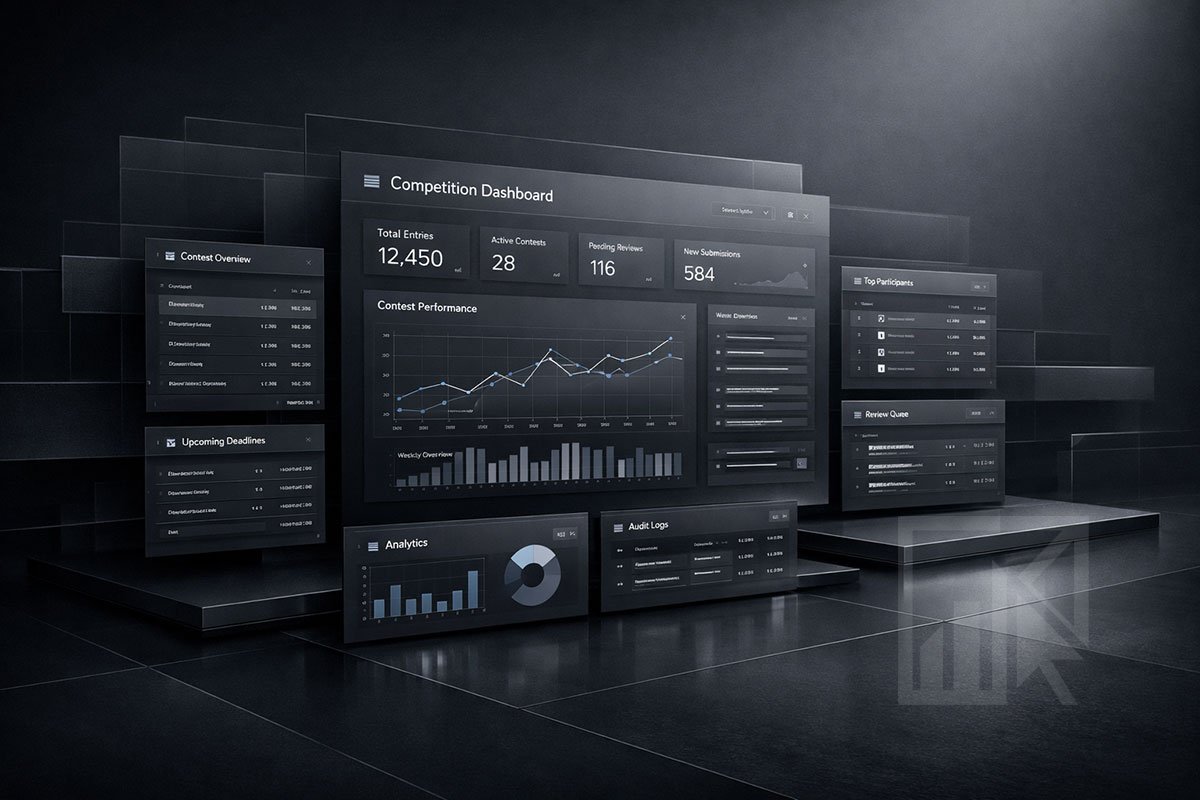
Why Most “Websites” Collapse When They Try to Scale
One of the most damaging misconceptions in this space is simple:
“We just need a competition website.”
That sentence alone explains why most online competition businesses struggle — or fail — once they gain traction.
A competition website and an online competition platform are not the same thing.
Confusing them leads to poor decisions, fragile systems, and expensive rebuilds.
This article explains what founders get wrong, and why the difference matters more than most realise.
This article is part of
Online Competition Platforms: The Complete Guide
What Founders Mean When They Say “Website”
When founders say “website”, they usually mean:
Pages that look good
A way to publish competitions
A checkout to take payments
Some basic admin access
This mindset comes from marketing projects, not system design.
A website is primarily:
Presentation
Content delivery
User-facing experience
Websites are built to be seen.
What a Competition Platform Actually Is
A competition platform is built to operate.
It includes:
User identity and account systems
Entry logic and validation
Payment orchestration
Outcome mechanisms (draws, scoring, results)
Admin control, audit trails, and reporting
Automation and rule enforcement
A platform is a system of rules and processes that happens to have a user interface.
Platforms are built to run reliably under pressure.
The Critical Difference: State and Logic
Websites are mostly stateless:
Pages load
Forms submit
Content displays
Platforms are stateful:
Users have histories
Entries accumulate
Conditions change over time
Actions depend on previous actions
Competition platforms must track:
Who entered
How many times
Under what rules
At what moment
Trying to manage this with “website thinking” is where things break.
Why Website-First Builds Fail
When platforms are built like websites, common failures appear:
Entry logic scattered across plugins
Payments disconnected from outcomes
No single source of truth
Manual fixes for automated problems
At small scale, this appears to work.
At real scale, it becomes unmanageable.
Websites tolerate inconsistency.
Platforms do not.
Plugins vs Architecture
Many founders believe:
“We’ll just add the right plugins.”
Plugins add features.
Platforms require architecture.
Plugins cannot:
Enforce complex rules reliably
Manage competing conditions
Guarantee auditability
Replace system ownership
The more plugins you stack, the less you understand the system.
At that point, no one is in control.
Admin Control Is Not an Afterthought
In website projects, admin panels are secondary.
In competition platforms, admin control is mission-critical.
A real platform requires:
Clear visibility of entries and users
Control over competition states
Ability to pause, resolve, or correct issues
Reliable reporting
If founders cannot confidently answer:
“What is happening in the system right now?”
…the system is already fragile.
Scaling Reveals the Truth
The difference between a website and a platform becomes obvious when:
Traffic increases
Multiple competitions run simultaneously
Edge cases appear
Support requests spike
Website-based systems degrade under pressure.
Platform-based systems absorb it.
Most founders discover this difference after investing in marketing.
Why Rebuilds Are So Common
Founders often say:
“We’ll rebuild it properly later.”
Later usually means:
Data migrations
Downtime
Lost trust
Higher costs
Rebuilds are not a failure of ambition.
They are the cost of starting with the wrong mental model.
The Correct Founder Mindset
Successful founders ask:
What system are we operating?
What rules must always hold true?
What happens when things go wrong?
Can this scale without manual intervention?
They design the platform first, and the website second.
Final Thought
A competition website can launch a campaign.
A competition platform sustains a business.
Founders who treat platforms like websites:
Move fast at first
Slow down under pressure
Eventually stall
Founders who treat platforms as infrastructure:
Move deliberately
Scale safely
Build assets that survive growth
The difference is not budget.
It’s thinking.
Continue Reading
Common Mistakes That Kill Online Competition Platforms
How Online Competition Platforms Make Money

Comments are closed.